




In the fast-paced world of eCommerce, increasing your conversion rate is crucial to the success of your online store. With the constant rise in competition, it’s more important than ever to ensure your website is optimized for maximum sales.
But how can you improve your eCommerce store’s conversion rate? In this comprehensive guide, we’ll explore the best strategies and techniques to increase your conversion rate in 2024.
Whether you’re just starting out with an eCommerce business or have been doing it for years, the tips in this article can help you to increase conversion rate and take your online store to the next level of success rate.
What is the Conversion Rate?
The Conversion rate refers to the percentage of people who take a desired action after interacting with a website or marketing campaign. This could be anything from making a purchase to filling out a form, subscribing to a newsletter, or clicking on a specific link.
It is calculated by dividing the number of conversions by the total number of interactions and multiplying by 100.
For example: If 100 people visit a website and 10 of them make a purchase, the conversion rate is 10%.
A higher conversion rate indicates that more people are taking the desired action, which is usually a primary goal for eCommerce businesses and marketers.
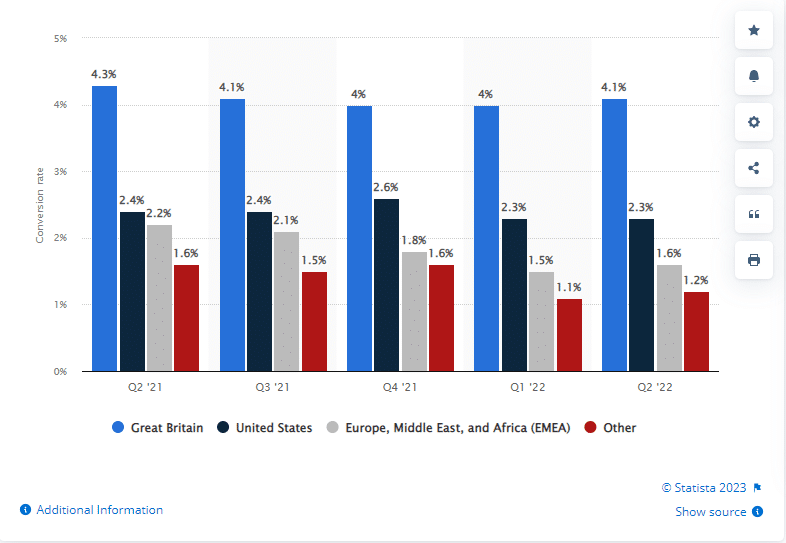
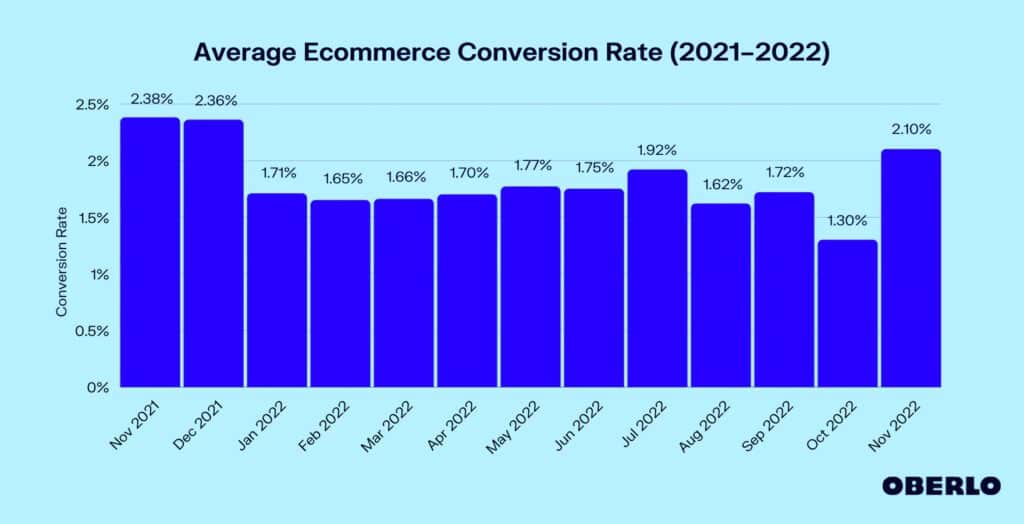
Recent research shows that the average conversion rate for all types of eCommerce stores is 3.65% as of 2022. Even though this number is an average and may not reflect how well a particular store is doing, it can be used as a benchmark.
There are many things that can affect to increasing conversion rate of an eCommerce store, such as the industry, the design of the website, the products sold, and the marketing strategies that you have used.
What is a Good Conversion Rate in an eCommerce Business?
If you have an online store, you should keep an eye on your conversion rate. This can be done with analytics tools like Google Analytics, which tracks how visitors use a website and how many of them buy something.
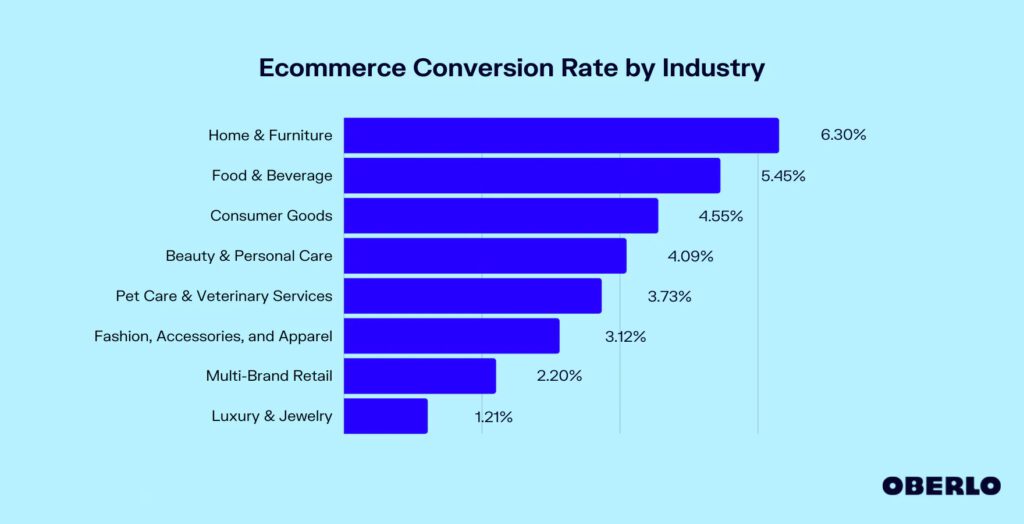
Here are the average eCommerce conversion rates by industry to give you an idea of what you should be aiming for:
- Home & Furniture (6.30%)
- Food and Beverage (5.45%)
- Consumer Goods (4.55%)
- Beauty and Personal Care (4.09%)
- Pet Care & Veterinary Services (3.73%)
- Fashion, Accessories, and Apparel (3.12%)
- Multi-Brand Retail (2.20%)
- Luxury & Jewelry (1.21%)
But it’s important to know that these are just averages. With the right optimization strategies, many eCommerce stores can easily increase conversion rates.
What are the 3 Cs of Conversion?
The “3 C’s of conversion” are three important factors that can affect how likely a website visitor is to do something like buy something or fill out a form and thus increase your conversion rate. These things include:
- Clarity
- Credibility
- Call-to-Action
Clarity:
Clarity means how clear and easy it is for a website visitor to understand what the website is offering and how to take action. To make things more clear and increase conversion rate, eCommerce stores can:
- Use headlines and subheadings that are clear, brief, and focused on the benefits of their products or services to show what they are worth. For instance, a headline like “Revolutionize Your Running with Our Lightweight and Durable Shoes” is more clear and more interesting than “New Running Shoes Available”.
- Use high-quality images and videos of your product that show it in action from different angles. For example, an online clothing store can show a model wearing an item from different angles and zoom in to show details like the fabric and stitching.
- Lastly, optimizing your eCommerce stores, such as improving website design, layout, and messaging, can significantly improve the conversion rate. Additionally, offering personalized product recommendations based on customer data and providing incentives such as temporary free shipping or discounts can also increase average order value and increase sales.
Credibility:
Credibility is how trustworthy and dependable a website seems to the users who visit it. Online stores can improve their credibility and increase conversion rate by:
- Put reviews and ratings from customers in a prominent place on product pages. Reviews from real customers can help potential buyers feel more confident that the product is of good quality and worth buying.
- Use security badges and SSL certificates to show that the website is safe and that customer data is safe. This is especially important of eCommerce websites that deal with sensitive information like credit card numbers.
- Use clear logos, consistent fonts, color schemes, professional design, and branding throughout the site. A website that looks good can help build your credibility and give visitors a good first impression.
Call-to-Action:
The call-to-action (CTA) is what the website visitor is asked to do, like “Add to Cart” or “Sign Up Now”. eCommerce stores can do the following to make CTAs work better and increase conversion rate:
- Use clear, short language that tells the visitor exactly what they will get if they take action. For example, “Get Your Free Trial Now” is a better CTA than “Sign Up” because it is clearer and more compelling.
- To make the CTA stand out on the page, use colors that are different from each other and fonts that are big. This can help catch the visitor’s eye and make them more likely to take action.
- Use urgency and scarcity to make people feel like they need to act now and get them to do so. For instance, a call-to-action (CTA) like “Only 2 Left in Stock—Buy Now” can encourage visitors to buy the product before it sells out.
By focusing on these three key elements—clarity, credibility, and a call-to-action eCommerce stores can optimize their websites to increase conversion rates and sales.
How Do You Fix a Low Conversion Rate?
For any business, a low conversion rate can be a frustrating issue as all the hard work becomes useless if there are no sales in your store. However, if you’re facing this challenge, there are some strategies to increase your sales in eCommerce stores.
Understand What Your Customer Wants:
A data-driven approach is essential for any business that wants to increase its conversion rate. One important part of this approach is doing research to learn more about the people you want to reach.
HubSpot says that people are twice as likely to reach their marketing goals if they understand what their customers want and need. So, analytics tools like Google Analytics, Mixpanel, etc should be used to track things like website traffic, click-through rates, bounce rates, and the amount of time people spend on a page to learn more about how customers act and what they like. Once these are understood, they can be used to come up with solutions that will help everyone succeed.
By understanding your customers’ preferences and behavior, you can adapt your marketing strategy and website to better understand your customers’ needs. This may involve modifying communication, website look and functionality, and product offerings.
By evaluating the effects of these changes over time and keeping track of metrics like conversion rate, you can find places where you could make improvements.
For example: A 1% increase in conversion rate means that the number of conversions is 50% higher than it was before. Through this ongoing process of optimization and analysis, you can get a clear picture of what’s going on in the market and set your business up for steady growth.
Invest in Marketing to Increase Conversion Rate:
Investing in marketing is one of the best ways to get more people to buy from your eCommerce store, and increase conversion rate. This can be done in several different ways, like:
- Pay-Per-Click (PPC) advertising means putting ads on search engine results pages (SERPs) or other websites and only paying when someone clicks on the ad. This can be a good way to get people who are interested in your site to visit, but it can also be expensive if you decide to hire some of the best PPC service providers.
- Search Engine Optimization (SEO) is the process of making your website and its content rank higher in organic search results. This can be a longer-term strategy, but it can also be very effective at driving traffic and sales over time.
- Social media marketing is when you use social media sites like Facebook, Instagram, and Twitter to promote your products and services to your audience. Social media for eCommerce can be a great way to get people to like you and spread the word about your business.
- Email marketing is when you send targeted emails to your subscribers to tell them about your products and offer deals or discounts. This can be a great way to follow up with leads and remind people about your brand thus increasing conversion rate.
Make the User Experience Compelling:
Improving your website’s conversion rate means ensuring that it looks good, is easy to use, and keeps people interested. Hubspot says that the number of conversions on a website with a well-designed interface can go up by up to 200%.
Also, The Nielsen Norman Group found that people who come to a website and can’t find what they’re looking for usually leave between 10 and 20 seconds.
Having a website with a clear layout and organized buttons is important if you want visitors to do what you want, like buy something or sign up for your newsletter.
All of these things help businesses make more money, so optimizing the user experience should be the top priority when figuring out how successful a website is and how to increase conversion rate.
Here are some tips on creating a compelling user experience to increase conversion rate:
- Try to Make Your Design Presentable: Use images, graphics, and other visuals on your site to make it more appealing to the people you want to visit it. Make sure it’s easy to use and doesn’t have a lot of stuff on it.
- Focus on Good Content: Make sure that all of your website’s content is relevant, short, interesting, and persuasive. It should highlight the benefits of working with you or buying your products or services.
- Use Social Media: Putting customer reviews, ratings, and testimonials on your site will help people who aren’t sure about making a decision or taking action right away trust and respect you.
- Faster Loading Times = Better Results: Improve your website’s speed by optimizing it for fast loading times. No one likes to wait for pages to load for a long time. The faster your page loads, the more you observe an increased conversion rate.
- Offer Incentives as Push Factors: Finally, you might want to think about giving visitors discounts or free trials as push factors to get them to make a decision.
Pricing Strategies and Payment Options:
Optimizing pricing strategies and payment options is one way to increase conversion rates. Here are some tips:
- Test Different Pricing Strategies: Try different pricing strategies, like discounts, bundle deals, or free shipping, to see which one your target audience responds to the most.
- Simplify the Checkout Process: By streamlining the checkout process, you can make it easier for customers to buy things. Take away any steps or information fields that aren’t necessary and might make a customer not want to finish the purchase.
- Offer Different Ways to Pay: Give customers different ways to pay, such as credit cards, PayPal, and Apple Pay, to meet their needs.
- Provide Clear and Transparent Pricing: Be clear about the price of your product or service, including any taxes or shipping fees, to avoid surprises at checkout.
Redesign Product Page and Landing Pages:
To increase conversion rate of your eCommerce store, it is essential to optimize your product profiles and landing pages. By optimizing these pages, you can give your customers a better experience, make them trust your brand more, and get them to buy from you.
Improving your product profiles means writing detailed, accurate descriptions of your products, highlighting their most important features and benefits, and adding high-quality images and videos. This helps customers understand the value of your products and make smart decisions about what to buy.
Refining landing pages involves optimizing design, layout, and messaging to create a convincing call-to-action that prompts customers to make a purchase. This results in clear and compelling pages that increase the likelihood of converting leads into sales.
This can mean trying out different versions of your landing pages to find out which parts are best at turning visitors into customers.
Overall, improving your product page and landing pages is an ongoing process that requires testing and tweaking to make sure that your site always gives users the best experience possible and gets the most conversions.
Utilize and Test Different Strategies for Converting Leads:
Testing is one of the most important things you can do to increase the conversion rate of your eCommerce store. A/B testing also called “split testing” is a common way to compare how well different versions of your website and marketing campaigns are performing.
By comparing different versions and seeing which ones work and which ones don’t work, and making decisions based on data to improve conversion rate.
You can test different parts of your eCommerce store with A/B testing, like landing pages, product pages, headlines, call-to-action, images, and pricing strategies.
Start by figuring out the most important parts of your store that you want to improve. Then, make two versions of each part to test.
For example: If you want to test your product pages, you could make two versions of the page with different product descriptions, images, and call-to-action. Then, use web analytics tools like Google Analytics, Mixpanel, or Hotjar to measure engagement metrics like time spent on a page, bounce rate, and conversion rate for each version.
It’s important to remember that testing should be something that goes on all the time. Once you know which version of an element works best, keep testing new versions to see if you can increase the conversion rate even more.
By testing and improving your eCommerce store regularly, you can give your customers a better experience and make more sales and thus improving your conversion rate.
Conclusion:
In conclusion, achieving success in your eCommerce business and enhancing your conversion rates requires a multipronged strategy. You must optimize design, enhance user experience, and utilize effective marketing tools to draw and keep customers.
The techniques discussed in this guide can help you build an exciting online shopping experience that converts prospects into paying clients. However, if you would like additional guidance or advice to increase your conversion rate, contact our expert eCommerce team.
Don’t hesitate to reach out–we’re here to help you accomplish your eCommerce goals.