




Table of Contents
- What is Automatic Discount on Shopify?
- Why Automatic Discount is Important for Scaling Your eCommerce Business?
- Benefits of Using Automatic Discounts to Scale Your eCommerce Business
- Types of Automatic Discounts You Can Use in Shopify
- 1. Percentage Discount
- 2. Fixed Amount Discount
- 3. Free Gift with Purchase Discount
- 4. Buy One, Get One Discount (BOGO)
- 5. Tiered Discount
- 6. Bundle Discount
- 7. Stackable Discount
- 8. Volume Discount
- How Automatic Discounts Work on Shopify to Scale Your eCommerce Business?
- 1. Setup the Discount Criteria
- 2. Choose the Discount Type
- 3. Apply the Discount Automatically
- 4. No Discount Codes Needed
- 5. Real-Time Application
- 6. One Discount Per Order
- 7. Tracking and Monitoring
- Difference Between Automatic Discount and Manual Discount
- How to Optimize Automatic Discounts for Maximum Profitability
- Conclusion
Share
Scaling an eCommerce business can be a complex challenge, especially when it comes to managing discounts. For many Shopify store owners, manually handling discounts can become a time-consuming and error-prone task, limiting growth and efficiency.
In today’s competitive market, offering the right discounts at the right time is crucial for attracting customers and boosting conversions. That’s where automatic discounts come in.
Automatic discounts are a powerful feature that allows store owners to streamline discounting, eliminating the need for manual input while offering personalized, targeted discounts to customers based on pre-set rules or conditions.
By automating this process, you can focus more on growing your business and less on tracking every discount code.
So, what exactly is an automatic discount?
Simply put, it’s a feature within Shopify that applies discounts automatically at checkout, helping businesses attract more customers and boost average order values.
In this guide, you’ll find everything you need to know to get started with automatic discounts on Shopify, including:
- What automatic discounts are and why they’re essential for scaling your eCommerce business.
- The different types of automatic discounts.
- How automatic discounts work on Shopify to scale your eCommerce business
- How to optimize automatic discounts for maximum profitability
What is Automatic Discount on Shopify?
An automatic discount on Shopify is a pricing strategy that applies discounts to a customer’s order without requiring a discount code. These discounts are triggered based on predefined rules or conditions, such as a minimum purchase amount, specific products in the cart, customer groups, or purchase history.
Unlike manual discounts, which require customers to input a discount code at checkout, automatic discounts streamline the buying process by applying the discount instantly.
This eliminates friction in the shopping journey, increasing conversion rates and customer satisfaction. Shopify allows store owners to set up automatic discounts directly within its dashboard or through third-party Shopify discount apps.
By leveraging automatic discounts, businesses can boost sales, encourage larger orders, and improve customer retention while maintaining full control over their pricing strategies.
Why Automatic Discount is Important for Scaling Your eCommerce Business?
Automatic discounts play a crucial role in the success and scalability of an eCommerce business on Shopify. By automating the discount process, store owners can streamline operations, increase conversions, and deliver a smoother customer experience.
Here’s why automatic discounts are important for scaling your eCommerce business:
1. Boosts Conversion Rates: Automatically applied discounts at checkout encourage customers to complete their purchases. When they see an instant discount at the checkout page without manually entering a code, they are more likely to buy.
2. Improves Customer Experience: Eliminates the hassle of entering manual discount codes, which can be a barrier for customers. A seamless checkout experience encourages repeat purchases and improves customer satisfaction, leading to higher customer retention.
3. Increases Average Order Value (AOV): Automatic discounts are often linked to specific order thresholds (e.g., free shipping after spending $50 or $100). This encourages customers to add more items to their cart, thus increasing the overall value of each order.
4. Enhances Personalization and Targeting: Automatic discounts allow Shopify store owners to tailor discounts based on different types of customer behavior, such as offering exclusive discounts to loyal customers or targeting first-time buyers with a special offer. This level of personalization can increase engagement and drive sales.
5. Avoids Missed Sales Opportunities: Without automatic discounts, potential buyers may forget to apply a discount code, which could lead to abandoned carts and lost revenue. Automatic discounts ensure that every eligible customer receives their discount without needing to take any extra steps.
Benefits of Using Automatic Discounts to Scale Your eCommerce Business:
Implementing automatic discounts on your Shopify store offers several key benefits that directly impact your sales, customer satisfaction, and overall business efficiency.
Here are the benefits of using automatic discounts:
1. Streamlined Checkout Process: Automatic discounts eliminate the need for customers to manually enter discount codes, reducing friction in the checkout process. This streamlined experience leads to fewer abandoned carts and a higher conversion rate.
2. Increased Customer Loyalty: Offering automatic discounts, especially personalized or loyalty-based ones, creates a sense of exclusivity for your customers. When customers know they will receive discounts automatically, they are more likely to return, and this increases customer loyalty to your business.
3. Saves Time for Store Owners: Automating the discount process frees up valuable time for eCommerce store owners. Instead of manually applying discount codes or tracking promotions, store owners can focus on more strategic areas like marketing and product development, allowing them to scale their business more efficiently.
4. Targeted Promotions: Automatic discounts enable personalized targeting based on customer segments, order history, or product categories. This allows you to run highly relevant promotions, such as offering discounts to new customers or rewarding loyal shoppers with exclusive deals, which can increase both engagement and conversions.
5. Reduces Cart Abandonment: With automatic discounts, customers don’t have to worry about forgetting or misplacing discount codes, which is one of the leading causes of cart abandonment. When discounts are applied automatically, there is less chance for frustration, leading to more completed transactions.
6. Competitive Advantage: Offering automatic discounts can make your Shopify store more appealing compared to competitors that require discount codes. Customers appreciate the convenience and are more likely to choose your store over others, especially when they feel like they are getting a great deal.
Types of Automatic Discounts You Can Use in Shopify:
Shopify offers different types of automatic discount options to enhance your store’s shopping experience and incentivize purchases. These discount types allow you to tailor offers based on specific business needs and customer behavior.
Below are some common types of automatic discounts you can use in the Shopify store:
1. Percentage Discount:

Percentage discounts are the most common type of discount. They offer customers a percentage off of their purchase, such as 10% off or 20% off. Percentage discounts can be used to attract new customers, reward loyal customers, and increase sales during slow periods.
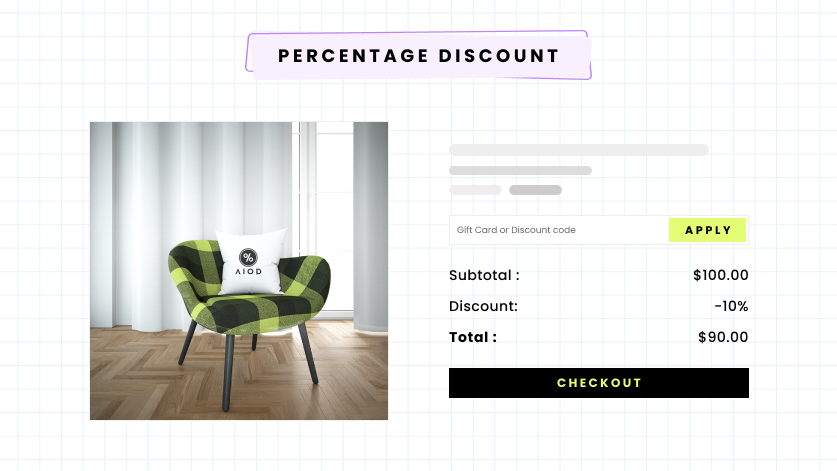
Use Case: This discount is great for seasonal promotions, flash sales, or encouraging customers to complete a purchase. It’s easy to apply and can be used storewide or for specific products or collections.
2. Fixed Amount Discount:

Fixed-amount discounts offer customers a fixed amount off of their purchase, such as $10 off or $20 off. These fixed discounts can be used to encourage customers to purchase more expensive items or to clear out excess inventory.
Use Case: This is ideal for creating incentives for customers to reach a particular spending threshold or for offering straightforward discounts on specific products. Fixed-amount discounts can be particularly appealing for budget-conscious shoppers.
3. Free Gift with Purchase Discount:

Gift with purchase discounts offer customers a free gift when they purchase a certain item or items. Free gift with purchase discounts can be used to attract new customers, increase sales of specific products, and reward loyal customers.
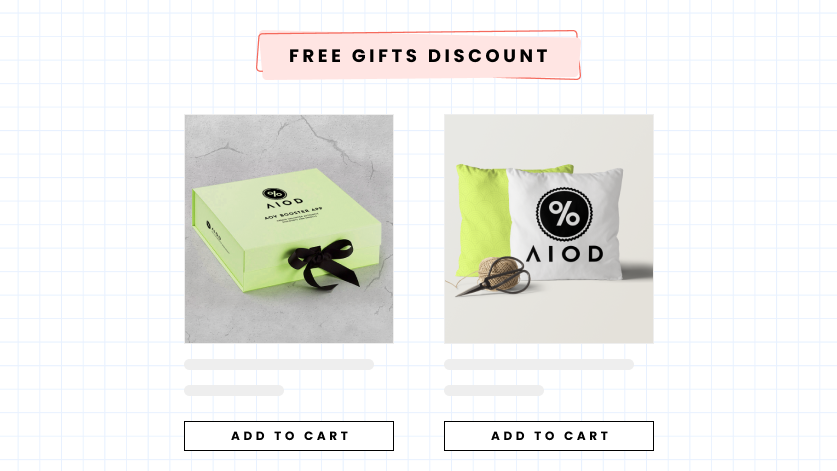
Use Case: This type of discount is perfect for encouraging upsells, promoting new products, or clearing out older inventory. It’s a great way to add value to the customer’s purchase while driving higher sales.
4. Buy One, Get One Discount (BOGO):

BOGO discounts offer customers a free item when they purchase another item. BOGO discounts can be used to attract new customers, increase sales of specific products, and clear out excess inventory.
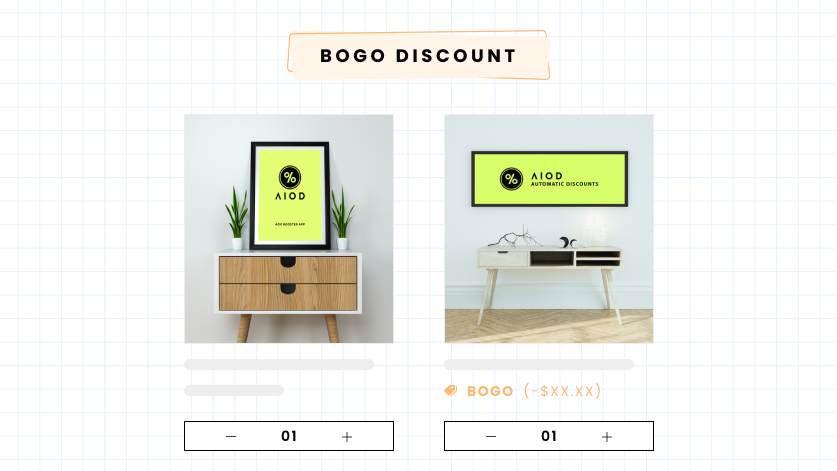
Use Case: BOGO offers are excellent for boosting sales volume, promoting specific products, and attracting customers looking for deals. It’s especially effective for fast-moving or popular products.
5. Tiered Discount:

Tiered discounts offer customers different discounts based on their purchase total. This can be used to encourage customers to purchase more expensive items or to clear out excess inventory.
For example, a customer might receive a 10% discount on purchases of $100 or more and a 20% discount on purchases of $200 or more.
Use Case: This discount encourages customers to spend more to unlock higher discounts, making it a powerful tool for increasing your average order value (AOV) and motivating larger purchases.
6. Bundle Discount:

Bundle discounts are a pricing strategy used by business owners to incentivize customers to purchase multiple products as a bundle. The Bundle discounts can be used to attract new customers, increase sales, and clear out inventory.
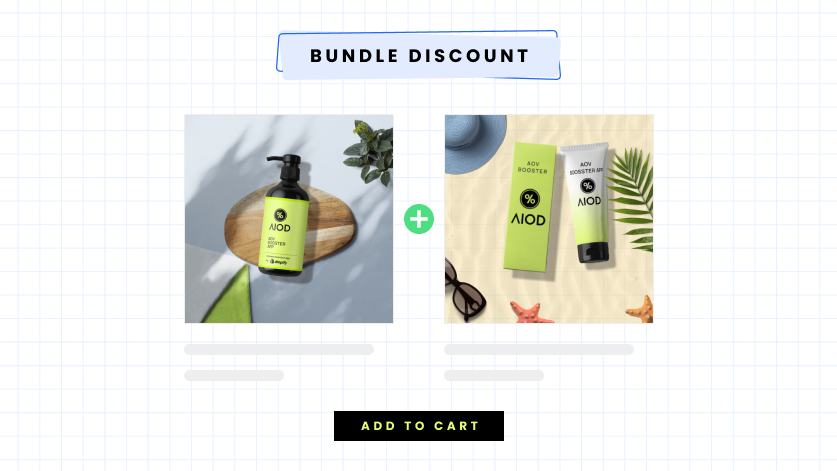
Use Case: Bundle discounts are effective for promoting product groupings, increasing sales of complementary items, and simplifying decision-making for customers. This type of discount is particularly useful for boosting sales in specific product categories.
7. Stackable Discount:

Stackable discounts refer to a strategy in which customers can apply multiple discounts to a single purchase, allowing them to enjoy the benefits of more than one discount at the same time.
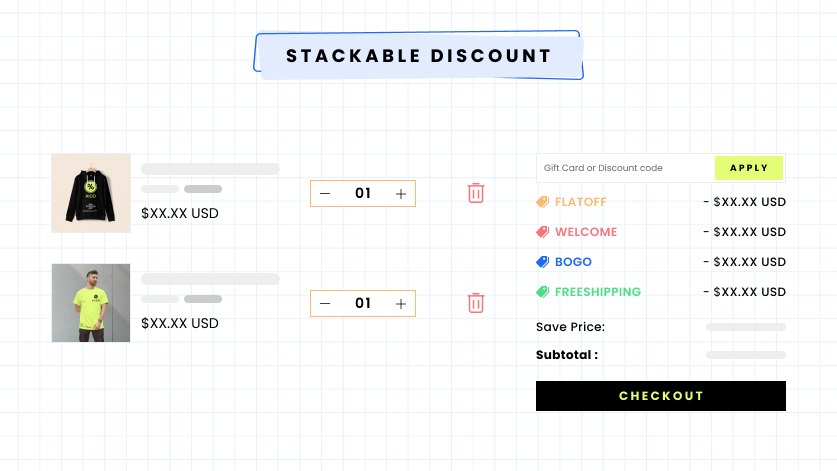
Use Case: While Shopify doesn’t allow stacked discounts, you need to use third-party apps that let you set up stackable discounts. This can be attractive to loyal customers or useful during special promotions, where multiple offers (e.g., a percentage discount plus free shipping) are applied to encourage larger purchases.
8. Volume Discount:

Volume discounts are strategically created to reward customers who make large purchases. This strategy is effective for business owners who sell products in various quantities and wish to encourage customers to buy in bulk.
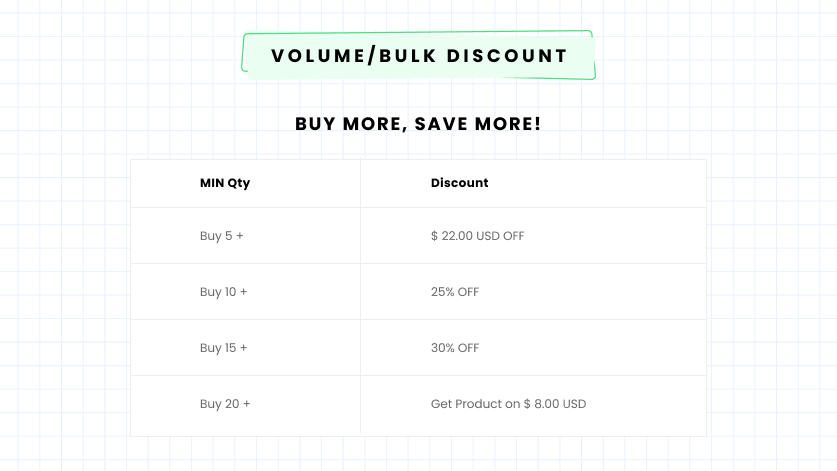
Use Case: Volume discounts are perfect for bulk buying or wholesale businesses. They help move large quantities of products while rewarding customers who make higher-volume purchases.
If you’re managing a Shopify store and finding it challenging to implement these discounts manually, using an app like “AIOD – All-in-One Automatic Discounts” can significantly streamline the process.
AIOD enables you to automatically apply and manage multiple discount rules, including all the types listed above, with minimal effort. With AIOD, you can focus more on growing your business and leave the technical aspects of discount management to the app.
By automating your discounts, you can improve customer experience, boost sales, and optimize the overall performance of your store, all while saving time on manual configurations.
To set up an automatic discount on your store, be sure to check out our comprehensive guide on creating discounts with AIOD – All-in-One Automatic Discount.
How Automatic Discounts Work on Shopify to Scale Your eCommerce Business?
Automatic discounts on Shopify are a convenient way for merchants to offer promotions without requiring customers to manually apply discount codes.
These discounts are triggered automatically when customers meet specific criteria, simplifying the shopping experience and encouraging higher conversion rates.
Here’s how they work:
1. Setup the Discount Criteria:
To begin using automatic discounts, you first need to define the rules that trigger the discount. These rules are customizable based on your business goals and can include:
- Minimum Purchase Amount: The customer must spend a specific amount to qualify for the discount.
- For example, “Spend $50 and receive 10% off”.
- Specific Products or Collections: Discounts can be applied only to certain items or product categories.
- For example, “20% off all T-shirts” or “10% off summer collection”.
- Customer Eligibility: You can limit discounts to specific customer groups, such as wholesale buyers, first-time customers, or loyalty program members.
2. Choose the Discount Type:
Once you’ve set up the discount criteria, it’s time to select the type of discount you want to offer. Shopify supports several types of automatic discounts, including:
- Percentage-Based Discounts: A percentage off the total order or specific items.
- For example, “15% off all orders over $100”.
- Fixed Amount Discounts: A set dollar amount off the order or specific products.
- For example, “Save $10 on orders over $50”.
- Free Shipping: Offering free shipping as an automatic discount can also incentivize customers to complete their purchases.
- For example, “Free shipping on orders over $75”.
3. Apply the Discount Automatically:
Once the discount criteria and type are set up, Shopify automatically applies the discount at checkout when the conditions are met.
For example, if a customer’s cart reaches the $50 threshold, the discount will be applied automatically, and they won’t need to enter a discount code.
This eliminates any extra steps for the customer, improving the overall customer shopping journey and reducing friction during the checkout process.
4. No Discount Codes Needed:
With automatic discounts, there’s no need for customers to manually enter a discount code. As soon as the customer meets the qualifying conditions, the discount is applied without requiring any input.
This is particularly useful in preventing lost sales due to customers forgetting or not having a coupon code. The simplicity of the process can improve conversion rates and customer satisfaction.
5. Real-Time Application:
Automatic discounts are applied in real-time, meaning customers will see the discount reflected immediately in their order total during the checkout process.
This instant feedback provides transparency and reinforces trust with customers, as they can clearly see the savings being applied to their orders. Real-time application of discounts enhances the overall shopping experience and builds customer loyalty.
6. One Discount Per Order:
Shopify limits each order to one active automatic discount. This ensures that the discount process remains simple and easy to manage.
However, you can combine automatic discounts with other offers, such as shipping discounts, providing customers with additional value. Limiting discounts to one per order also helps maintain profit margins while still offering attractive promotions.
If you want to apply multiple discounts per order, you need to use a third-party app like “AIOD – All-in-One Automatic Discounts”, which we mentioned above.
7. Tracking and Monitoring:
Shopify provides a feature to track and monitor the performance of automatic discounts. You can see how often discounts are being used, how they’re affecting sales, and whether they’re helping you reach specific business goals, like increasing average order value or driving repeat purchases.
This data is invaluable for refining your promotional strategies and ensuring that your discounts are having the desired impact on your business growth.
Difference Between Automatic Discount and Manual Discount:
Shopify offers two types of discounts: Automatic Discounts and Manual Discounts (Discount Codes). Both help merchants attract customers and increase sales, but they work differently.
Below is a detailed comparison to help you understand the key differences and choose the right discount strategy for your store.
Automatic Discount vs. Manual Discount: Key Differences:
| Feature | Automatic Discount | Manual Discount (Discount Code) |
|---|---|---|
| Definition | Discounts are applied automatically when the customer meets the conditions. | Discounts that require customers to enter a promo code at checkout. |
| Customer Action | No action is required from the customer. | Customers must manually enter the discount code. |
| Ease of Use | Very easy for customers – discount is applied automatically when the conditions are met. | Requires customers to remember and input the correct code. |
| Discount Types | Offers types such as percentage-based, fixed amount, free shipping, etc., based on set criteria. | Offers similar types of discounts, but the customer must apply them by entering a code. |
| Eligibility | Criteria are set in advance (e.g., minimum purchase amount, specific products or collections, or customer group). | Discount is available for anyone with the code, typically applied to all customers or specific campaigns. |
| Stackability | Can only be one discount per order, but it can be combined with other offers like free shipping. | Can be combined with other discounts depending on store settings and coupon code configuration. |
| Checkout Experience | Simplifies the checkout process for customers, as they don’t have to do anything extra. | Adds a step for customers, requiring them to manually enter a code to see the discount. |
| Visibility | Visible upfront at checkout once conditions are met, creating transparency. | Visibility depends on the marketing of the discount code, and customers may not know to enter it. |
| Sales Strategy | Ideal for attracting customers with effortless savings. Often used for seasonal promotions and site-wide discounts. | Best suited for targeted promotions, email campaigns, or exclusive offers to encourage specific actions. |
| Application Scope | Can be set to apply site-wide, on specific products, or categories, or to specific customer groups. | Typically applies to specific customer groups or campaigns and may need more frequent updating or management. |
| Complexity | Simpler to set up and manage in the Shopify Admin. Shopify automatically tracks conditions. | Requires manual management of discount codes and distribution, which can be more time-consuming. |
Summary of key differences:
- Automatic discounts, offer a more seamless, hands-off approach for both merchants and customers. Once set up, they apply automatically based on defined rules, improving the customer experience by reducing friction at checkout.
- Manual discounts, on the other hand, require customers to actively apply a discount code. While offering more flexibility and control, they can be less convenient for customers, particularly if they forget or fail to use the code.
Common Challenges in Managing Discounts:
Managing discounts effectively in an eCommerce store, especially on platforms like Shopify, can present a variety of challenges.
While discounts are a powerful tool to boost sales and attract customers, they need to be carefully managed to avoid complications such as misuse, inconsistency, and missed revenue opportunities.
These challenges can become even more complicated with the growing number of discounts, promotions, and customer groups that need to be tracked.
Below are some common discount management challenges that Shopify merchants face:
- Overlapping Discounts: When multiple discounts are applied to the same order, it can lead to confusion and incorrect calculations.
- Incorrect Discount Application: Discount rules or conditions may not always be applied correctly, leading to errors in customer orders.
- Mismanagement of Discount Codes: Manually managing discount codes across different marketing channels can lead to expired or redundant codes being used.
- Complex Discount Structures: Some discount strategies, like tiered or bundle discounts, can be complicated to set up and manage, making it harder to ensure they are being applied correctly.
- Loss of Revenue Due to Overuse: Discounting too frequently or offering deep discounts can result in revenue loss, especially if they aren’t well-targeted.
How to Optimize Automatic Discounts for Maximum Profitability:
Optimizing automatic discounts in your Shopify store can significantly enhance profitability. While offering discounts is an excellent way to increase sales, it’s crucial to ensure they’re structured in a way that maximizes your store’s bottom line.
By carefully strategizing discount conditions, targeting specific customer segments, and measuring the impact of each promotion, you can create a balanced discount strategy that drives sales without eroding profit margins.
Here are 10 optimized tips to maximize profitability on your Shopify store:
1. Set Clear Profit Margins:
Before applying discounts, calculate your profit margins to avoid losses. When setting up automatic discounts, it’s crucial to calculate the impact of the discount on your profitability.
This means considering the cost of products you are selling, operational expenses, and potential overheads when defining the discount structure. Knowing your margin helps you set limits that allow discounts while maintaining a healthy profit.
Tip: Always ensure that the discount you offer doesn’t result in a negative profit margin. Use Shopify’s built-in reports to track margins and adjust discount strategies as needed to keep profitability intact.
2. Use Tiered Discounts to Encourage Bigger Purchases:
Tiered discounts involve offering different discount levels based on the value of the purchase.
For example, offering 5% off for orders over $50, 10% off for orders over $100, and 15% off for orders above $150.
This strategy encourages customers to spend more in order to unlock greater savings, thus boosting the average order value.
Tip: Structure your tiered discounts to motivate customers to spend just a little more to reach the next discount level. This approach can increase your sales while ensuring discounts are linked to higher purchases.
3. Target Specific Customer Segments:
By targeting specific customer groups such as new customers, loyal customers, or VIP members, you can tailor discounts that resonate more with the recipient.
Shopify allows you to segment customers based on their behavior, purchase history, or location. By customizing your discounts to different segments, you enhance customer satisfaction and can build long-term relationships.
For example, offer returning customers a loyalty discount or a special discount to first-time buyers to encourage conversions.
Tip: Use Shopify’s customer segmentation tools to create personalized offers that cater to the buying habits of each group.
4. Time Discounts Strategically:
Time-sensitive discounts create a sense of urgency, encouraging customers to make a purchase quickly before the offer expires.
Strategically timing your discounts, such as offering flash sales, end-of-season promotions, or holiday deals, can significantly increase conversion rates during key sales periods.
Customers are more likely to act when they know they’re getting a limited-time offer.
Tip: Plan your discount strategy around key shopping dates like Black Friday, Cyber Monday, or your business’s off-peak season to drive traffic and increase sales during those periods.
5. Combine Discounts with Upsells and Cross-Sells:
Combining automatic discounts with upselling and cross-selling strategies allows you to offer discounts on additional products that complement the customer’s current purchase.
For example, if a customer is buying a laptop, you can offer a discount on accessories like a laptop stand or mouse. This strategy boosts your average order value (AOV) while giving customers more value for their money.
Tip: Integrate upsell and cross-sell offers into your checkout process, so customers are automatically prompted to add complementary items at a discounted price, making the overall deal more attractive.
6. Monitor Discount Performance with Analytics:
Tracking the effectiveness of your automatic discounts through analytics allows you to assess their impact on sales, conversion rates, and profitability.
Shopify’s analytics provide detailed reports on how different discounts perform, helping you make informed decisions about future discount strategies and whether adjustments are needed.
Tip: Regularly review your discount performance reports in Shopify to identify which discounts are most successful, and refine your strategies by discontinuing ineffective discounts or optimizing high-performing ones.
7. Prevent Discount Abuse with Smart Rules:
Discount abuse can occur when customers take advantage of loopholes, such as stacking multiple discounts or using codes that weren’t meant for them.
By setting smart rules and restrictions, you can prevent misuse and ensure that discounts are applied only under legitimate conditions, helping maintain profitability while preventing fraud.
Tip: Use Shopify’s smart discount settings to restrict the usage of discount codes, ensure that only one discount is applied per order, and prevent stacking of promotions that could negatively impact your margins.
8. Leverage Customer Loyalty Programs:
Customer loyalty programs reward repeat customers with exclusive discounts or perks, fostering long-term relationships.
These programs encourage repeat business and can be seamlessly integrated with automatic discounts to make loyal customers feel valued. Offering automatic discounts through loyalty programs increases engagement and helps boost retention.
Tip: Offer a special automatic discount for customers who reach a certain loyalty tier or milestone. This encourages more frequent purchases and builds long-term brand loyalty while increasing your revenue.
9. A/B Test Different Discount Strategies:
A/B testing involves testing two versions of a discount offer to determine which one performs better in terms of sales and customer engagement.
By testing different discount types, offers, and timing, you can identify the most effective strategies for your store. Continuous testing ensures that your discounting approach remains optimized over time.
Tip: Regularly perform A/B tests on your discount strategies. Test variables like the type of discount (percentage vs. fixed amount), the timing of the offer, and customer segmentation to see which generates the best results and refine your approach accordingly.
Conclusion:
In conclusion, scaling an eCommerce business requires smart strategies to increase conversions, enhance customer experience, and maintain profitability.
Throughout this guide, we’ve explored how automatic discounts on Shopify can help you achieve these goals by streamlining the discounting process and eliminating manual inefficiencies.
Recap of Key Points:
- Understanding Automatic Discounts: These are pre-set discounts that apply automatically when customers meet specific criteria, removing friction from the buying process.
- Why Automatic Discounts Matter: They drive higher conversion rates, increase customer loyalty, and reduce cart abandonment, all of which contribute to sustainable growth.
- Types of Automatic Discounts: From percentage-based discounts and BOGO offers to volume-based and tiered discounts, Shopify provides multiple ways to incentivize purchases.
- How to Optimize Discounts for Profitability: Strategic discounting, customer segmentation, A/B testing, and leveraging loyalty programs ensure that discounts contribute to revenue growth rather than erode margins.
- Common Pitfalls to Avoid: Mismanagement, overuse of discounts, lack of proper tracking, and discount stacking without control can harm profitability.
Scaling your eCommerce business doesn’t have to be complicated. By leveraging automatic discounts, you can enhance customer satisfaction, increase conversions, and drive long-term growth.
To simplify discount management and maximize your store’s potential, try AIOD – All-in-One Automatic Discounts app today. With discount automation, flexible discount rules, and seamless integration with Shopify, AIOD helps you unlock higher revenue and create a frictionless shopping experience for your customers.
Start optimizing your Shopify store now and watch your business scale effortlessly!